A computational toolkit for analyzing recordings of non-human acoustic communication —
primarily cetacean vocalizations. It loads audio with provenance, segments it
into listenable units, clusters those units, and provides information-theoretic
and sequence-statistical primitives for the resulting symbol streams.
Round-trip invariant. Every primitive that touches audio keeps
the audio playable. Detected units carry their own samples; clusters yield
audio exemplars; embeddings ship with a lookup back to the source clip. If you
cannot listen to it at every stage, the primitive is wrong.
What it sounds like
Three species, three acoustic regimes — all pulled live from the remote
data catalog bundled with the toolkit. Head to the audio gallery for more.
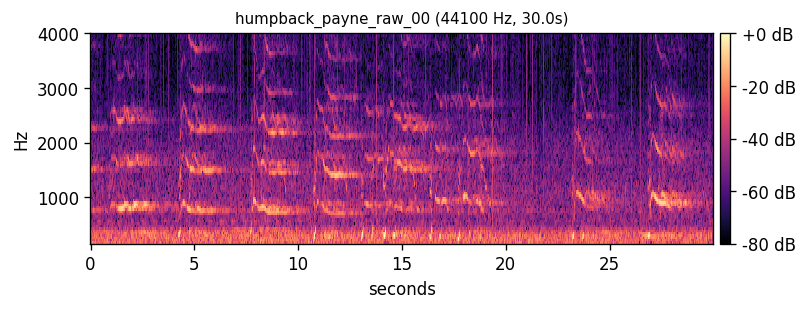
Humpback whale song
Megaptera novaeangliae. Tonal, hierarchical. Energy in 200–2000 Hz.44100 Hz30 s
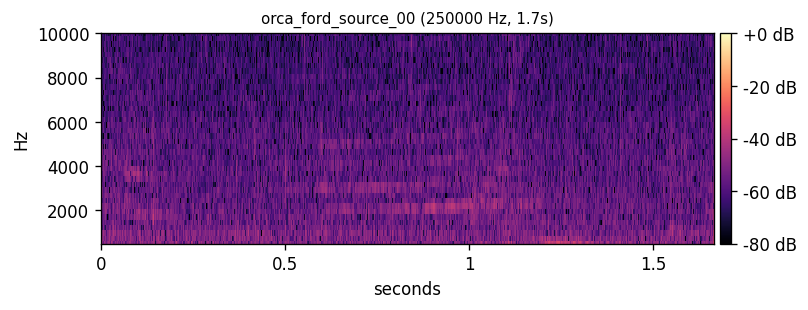
Killer whale source call
Orcinus orca. Short stereotyped pulsed call, recorded at 250 kHz.250000 Hz1.7 s
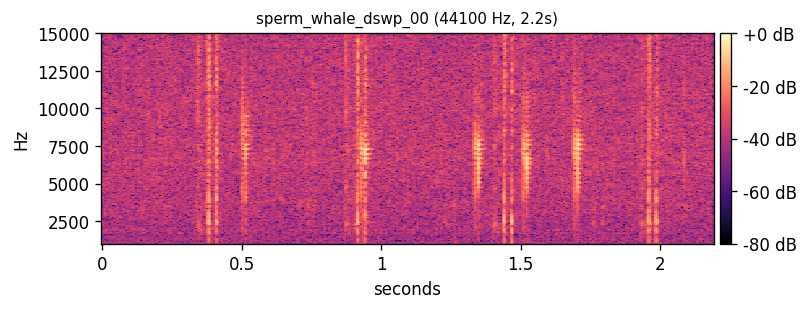
Sperm whale coda
Physeter macrocephalus. Rhythmic broadband click train — the information is in the timing.44100 Hz2.2 s
A round-trip through the pipeline
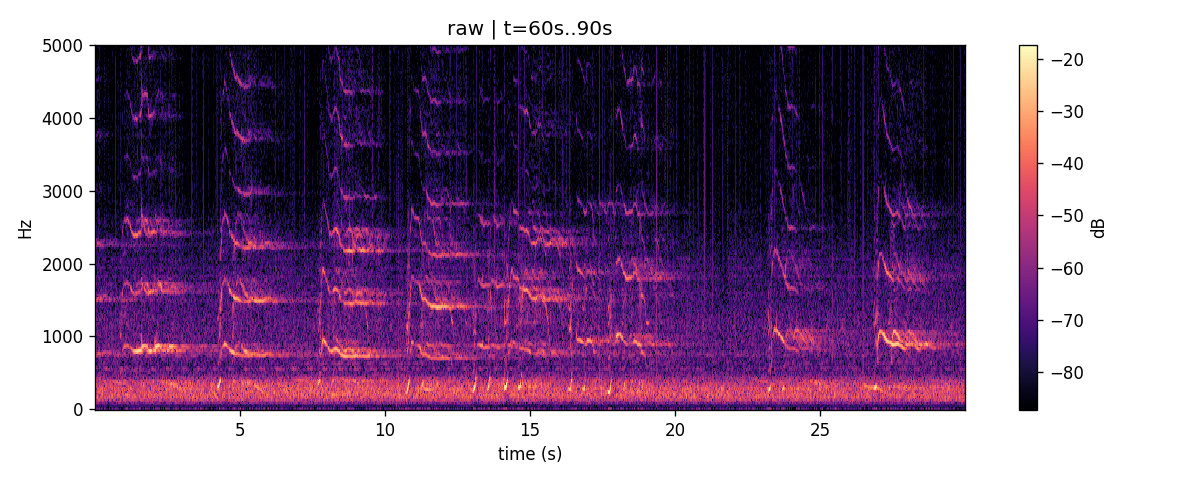
Stage 0 — raw recording
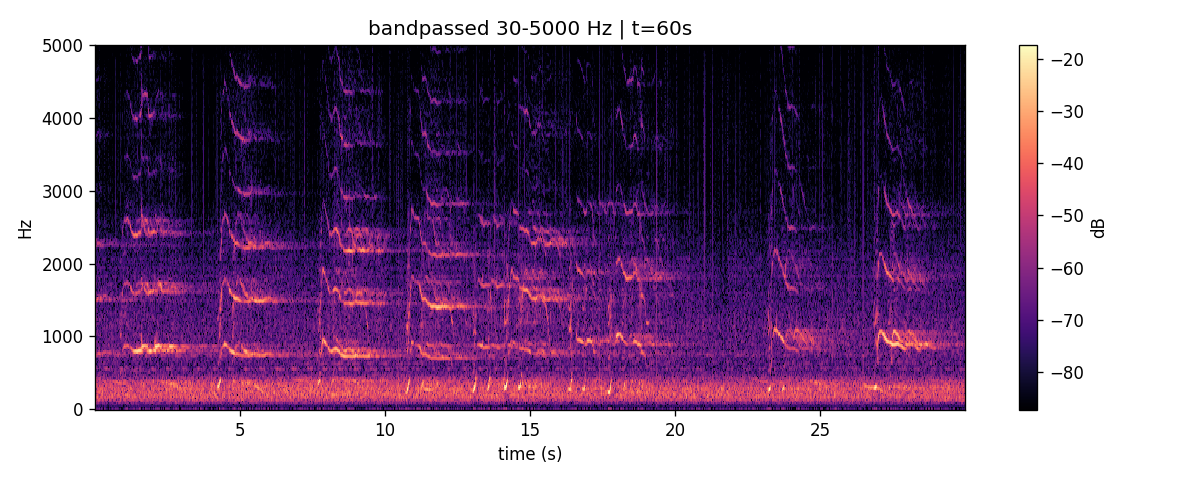
30 s excerpt of humpback song from the Payne & McVay 1971 corpus.30 s
Stage 1 — bandpassed (40–4000 Hz)
Same audio after a Butterworth bandpass; the sub-40 Hz rumble is gone.
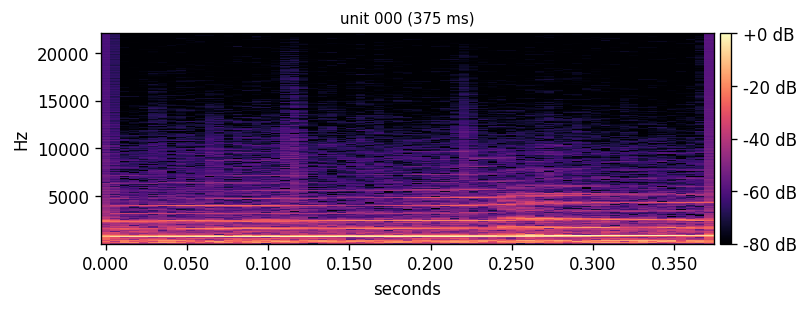
Stage 2 — segmented unit
Energy-based detection yields timestamped clips. Each one is a Unit object you can listen to.0.375 s
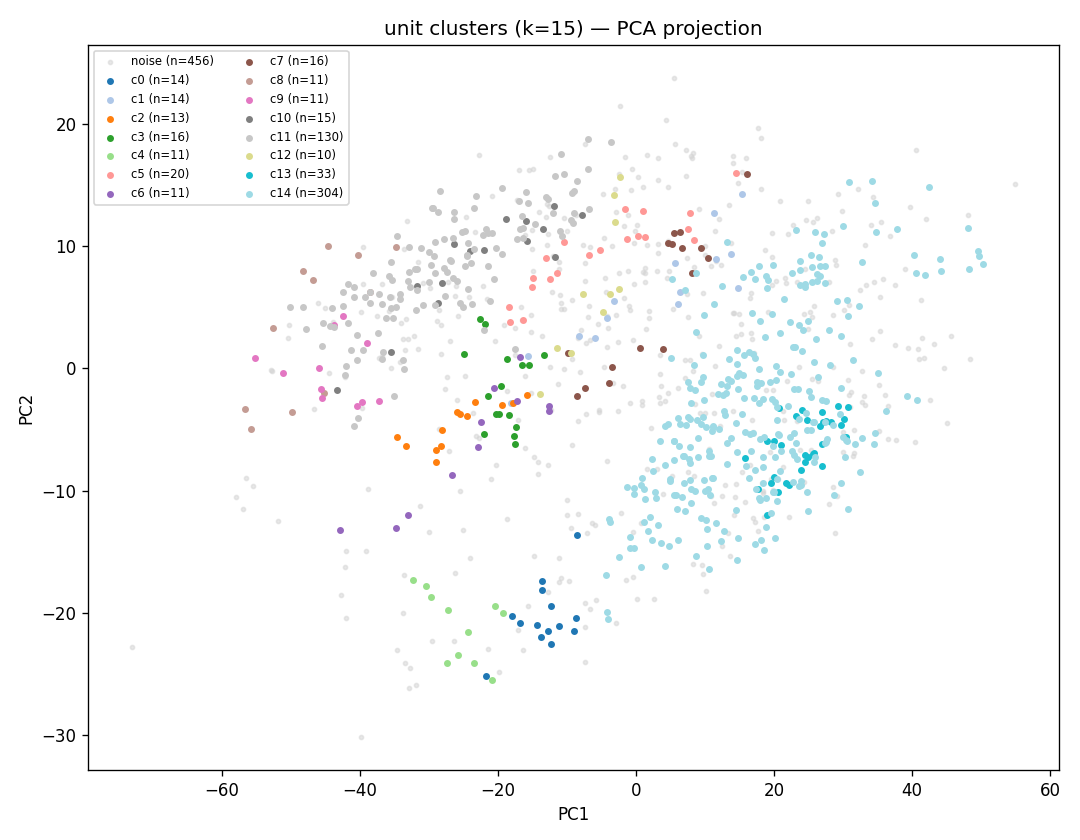
Stage 3 — cluster exemplar
A representative unit from cluster 0 after standardise → PCA → HDBSCAN. Scatter shows units projected into PCA space coloured by cluster.